3 Ways Ergonomics Helps Prevent Workplace Injuries
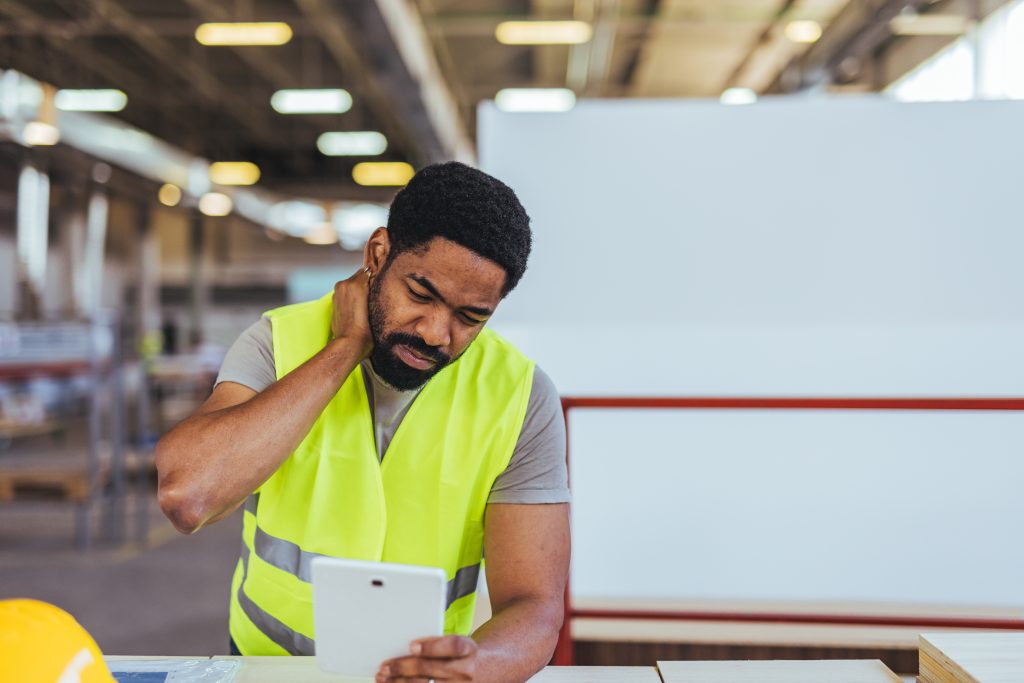
In the modern industrial landscape—whether a bustling manufacturing floor, a high-volume warehouse, or any environment requiring manual labor—the application of ergonomics is more relevant than ever. Fitting the job to the person, rather than forcing the person to fit the job, holds numerous benefits over the tenure of an employee.
For many businesses, the idea of hiring an industrial athletic trainer might initially seem like a steep up-front cost. However, our partners have consistently discovered the long-term cost benefits of proper training, improved body mechanics, and task-specific ergonomics.
These investments do more than just improve comfort; they are critical tools that help prevent injuries at the workplace, reducing downtime and workers’ compensation claims.
But ergonomics can inform more than just the individual worker’s body mechanics. Based on data collected during ergonomic risk assessments, our team regularly provides insights above and beyond what our partners expect, leading them to make better-informed decisions at all levels of safety and management.
Ergonomics assessments
The foundation of any successful cost-saving safety program is data. Ergonomics isn’t based on hunches or intuition; it’s a science rooted in physics and physiology. There are measurable risk factors in almost every aspect of a job, from the angle of the spine during a lift to the height of a workstation surface.
Depending on your organization’s specific needs, these workplace assessments can track much more than just body mechanics during job tasks. A thorough review might include analyzing noise levels, job site traffic patterns that increase collision risks, and other environmental workplace hazards.
After the assessment is complete, the program begins in earnest. This involves constant communication with supervisors, safety team leaders, and Human Resources as needed to ensure everyone is aligned on the progress and goals.
Our ergonomic program begins and centers on educating, training, and providing personalized ergonomic interventions to individual workers or teams. However, there are other areas of ergonomic intervention that are not as obvious, yet yield significant results.
1. Pre-work warmups
If your workforce performs manual labor, they are industrial athletes. Just like a professional soccer player wouldn’t sprint without stretching first, a warehouse worker shouldn’t lift heavy boxes without preparing their body to do so.
In some workflows and job duties, “cold starts” to doing physical labor can be a major risk factor for muscle strains and other musculoskeletal injuries.
When muscles are idle, they are less flexible and more prone to tearing or straining under sudden loads. Implementing a task-specific warmup routine helps prepare the body for the physical demands of the shift. Warming up major muscle groups increases blood flow, raises muscle temperature, and improves flexibility.
With greater range of motion and resilience, workers are less susceptible to the most extreme changes in muscular demands, reducing injury rates over time.
2. Job rotation strategies
Muscle fatigue is another major contributor to injury risk. Even a well-conditioned industrial athlete cannot maintain peak physical performance for hours on end using the exact same muscle groups. Repetitive motion without adequate recovery is a recipe for overuse injuries.
This is where job rotation strategies come into play. By rotating duties throughout a shift, you can provide needed rest for specific muscle groups while the employee remains productive in a different capacity. For example, a worker might spend two hours lifting, followed by two hours of quality control inspection or driving a forklift. This allows the muscles used for lifting to recover while the worker contributes elsewhere.
Beyond the physical benefits, job rotation also helps alleviate mental fatigue. Doing the same repetitive task for eight hours can also lead to a drop in focus, which is often when accidents and mistakes happen. Rotating tasks keeps the mind engaged and alert, reducing quality errors and safety incidents simultaneously. Employees trained on multiple job tasks are also much more valuable to the organization.
3. Capital purchase decisions
Sometimes, injury risks don’t arise from a worker’s movement, but rather from the tool they are using. Not every industrial machine is designed with the full awareness of the human operator in mind. Our team provides risk assessments and ergonomic data-driven insights for major capital purchases to ensure you aren’t buying a future liability.
Consider a hypothetical situation where a facility manager is looking at a new piece of heavy machinery. It might be a top-of-the-line model, but if it requires an operator to bend awkwardly or reach overhead repeatedly, that expensive piece of equipment may increase rates of recordable injuries over its lifetime. The cost of those injuries might even outweigh the productivity gains.
Again, these ergonomic risks aren’t vague: they can be calculated, predicted, and budgeted. Our team will help you analyze proposed purchases to ensure they don’t needlessly increase musculoskeletal injury risk, and how to minimize any risk if it’s unavoidable.
Discover Work-Fit’s ergonomic advantages
As our partners know, preventing workplace injuries requires more than just a safety poster in the breakroom. It requires a personalized, scientific approach to how tasks are performed, how shifts are structured, and what tools are used. But even through implementing relatively simple and thoughtful techniques like warmups, job rotation, and data-driven purchasing decisions, you can create a safer, more productive work environment. If you’re ready to see how science-based ergonomics can protect your team and your bottom line, we are here to help. Contact Work-Fit today to learn more about our newly expanded ergonomic program.